Downloads of archived datasets remained stable - growth in educational use continued in 2025
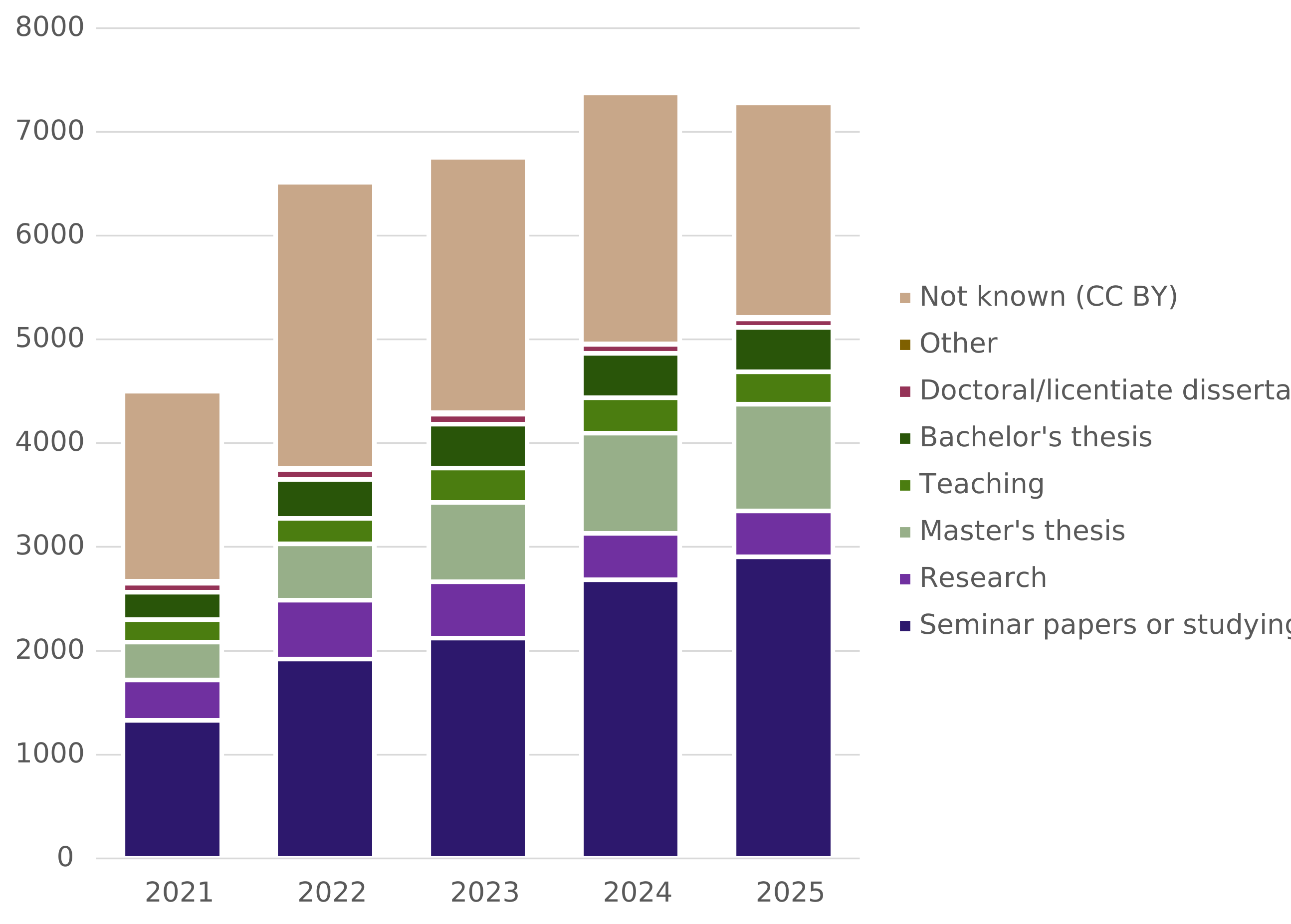
Datasets from FSD were downloaded extensively from Aila also in 2025. The use of qualitative datasets increased, while the use of quantitative datasets declined slightly due to a decrease in downloads of openly licensed datasets. The number of registered users continued to grow. The use of datasets for various coursework assignments and master's level theses increased.
During the year, FSD processed 6,320 data access applications (2024: 6,467). A total of 7,279 datasets were delivered for secondary use (2024: 7,372), of which 68 per cent were quantitative (2024: 70%) and 32 per cent qualitative (2024: 30%). Since the launch of Aila in May 2014, datasets have been downloaded more than 49,000 times in total.
The share of openly licensed datasets accounted for 28% of all downloads (2024: 33%). These CC BY 4.0 datasets were downloaded 2,068 times during the year (2024: 2,413). Open datasets represent eight per cent of FSD's total data holdings. The majority of downloads (63%) concerned datasets that require registration and may be used for research, teaching and study purposes. These datasets account for 74% of the data available in Aila.
Higher education institutions the most active users
During the year, datasets were downloaded most frequently in January and February. Among registered users, the majority were affiliated with Finnish higher education institutions.
The highest number of downloads originated from Tampere Universities (22%), followed by the universities of Eastern Finland (17%), Oulu (12%), Turku (10%), Helsinki (10%) and Jyväskylä (9%). Finnish universities accounted for 90 per cent of all downloads (2024: 87%), universities of applied sciences for 5 per cent (2024: 8%), and other domestic research organisations for 1 per cent (2024: 1%). Four per cent of datasets were delivered to foreign organisations (2024: 3%), and 12 per cent of downloads were made via Aila's English-language catalogue (2024: 14%).
Expansion in educational use – popularity of the qualitative datasets growing
When examined by purpose of use, datasets were increasingly utilised in undergraduate studies. Compared to 2024, the use of datasets in master's theses increased by seven per cent and in coursework assignments by eight per cent. The use of qualitative datasets increased by four per cent compared to the previous year.
The most frequently downloaded dataset was once again FSD3217 European Social Survey 2016: Finnish Data, which focuses on climate change, energy security and wellbeing. Among datasets published in 2025, the most downloaded were FSD3944 Citizen's Pulse 10/2024 and FSD3868 Experiences of Intergenerational Poverty 2024, collected using FSD's Penna tool.
A record high in the number of datasets
A record number of new datasets were published in Aila in 2025: a total of 136 (2024: 115). Of these, 103 were quantitative (2024: 89) and 33 qualitative (2024: 26). Nine datasets were published as openly available under the CC BY license (2024: 13).
At the end of the year, Aila contained 2,154 datasets, of which 1,756 were quantitative and 398 qualitative. By the end of 2025, 49 datasets collected using Penna were available in Aila. FSD acquired 105 datasets during the year (2024: 105).
In 2025, datasets were downloaded from Aila by 2,851 individual registered users (2024: 2,774). At the end of the year, the total number of registered users stood at 7,070 (2024: 6,442).
Further key figures and information on the activities of FSD will be presented in the annual report, to be published online in late spring.