Increasing Trustworthiness of European Digital Repositories: FSD's Contribution to the FIDELIS Project in 2025
The FIDELIS project aims to establish and consolidate a European network of FAIR‑enabling, Trustworthy Digital Repositories. Drawing on its experience as a certified trustworthy digital repository and CESSDA Service Provider, FSD helps ensure that project outputs are sustainable, and usable for repositories at different stages of maturity across Europe.
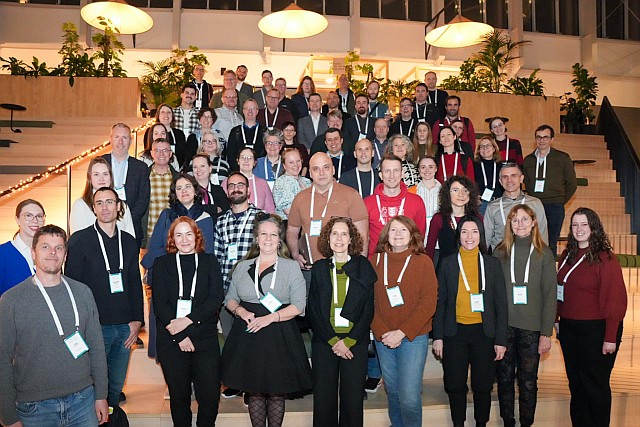
The European research ecosystem, and especially the development of the European Open Science Cloud (EOSC) (Opens in a new tab) , increasingly depends on digital repositories that are FAIR-enabling, trustworthy and sustainable. The three-year FIDELIS project (Opens in a new tab) (2025-2027) responds to this need by strengthening collaboration across repositories, by developing recommended and shared practices and by providing training that supports high-quality data stewardship.

In 2025, the Finnish Social Science Data Archive (FSD) played a significant role in advancing these objectives. Drawing on our long experience as a certified trustworthy digital repository and a CESSDA ERIC (Opens in a new tab) Service Provider, we contributed to conceptual development, empirical analysis, and practical implementation activities central to FIDELIS's impact, as well as to the project leadership. We focused on ensuring that project outputs are not only theoretically sound, but also usable by digital repositories at different stages of maturity.
Building an Evidence Base: Repository Landscape Analysis
A core contribution of FIDELIS in 2025 was a systematic analysis of the European digital repositories. FSD was actively involved in this work, contributing expertise to the design, analysis and interpretation of the survey, and opening of the data. FSD's contribution was also important in ensuring that discipline specific perspectives of social science data repositories were represented.
Key outputs include the FIDELIS landscape survey analysis and the openly available repository landscape dataset. They provide a detailed picture of repository governance models, service portfolios, policies and practices, and resourcing challenges across Europe. The dataset is complemented by openly published analysis scripts, ensuring transparency and reproducibility. These resources provide an evidence-based foundation for strategic decisions and further FIDELIS work. They also increase knowledge about repository practices and highlight the diversity of repositories and the contexts in which they operate.
Key outputs
- FIDELIS landscape survey analysis (Opens in a new tab)
- Repository landscape data (Opens in a new tab)
- Analysis scripts (Opens in a new tab)
Harmonising Repository Practices
Beyond describing and analysing the landscape, FIDELIS focused on harmonising how repository trustworthiness can be understood. The main output in 2025 was the Transparent Trustworthy Repository Attributes Matrix (TTRAM). It addresses fragmentation across existing Trustworthy Digital Repository (TDR) standards and various repository assessment frameworks by aligning key repository functions, activities, and characteristics. TTRAM helps repositories systematically reflect their practices and identify areas for improvement, and understand how they relate to broader trust frameworks. In addition, TTRAM provides a shared vocabulary for dialogue between a wide variety of stakeholders including repositories, researchers, standard bodies, and funders.
We contributed to building, testing, and early adoption of TTRAM, bringing a practitioner's perspective informed by experience about certification processes and continuous quality development. At the same time, the work helped us to identify some areas where we could further improve FSD's practices and procedures.
FSD also participated in TTRAM workshops and training interventions, helping to translate the framework into actionable practice and to foster peer learning across a variety of repositories.
Key outputs
- Harmonised Matrix of Repository Functions, Activities & Characteristics (D5.1) (Opens in a new tab)
- TTRAMatrix Guide (Opens in a new tab)
- TTRAMatrix Template (Opens in a new tab)
Supporting Early Adopters and Capacity Building
A defining feature of FIDELIS is its strong focus on support, implementation, and community uptake. FSD contributed by adding value for early adopters of the network and by coordinating and supporting training activities. Through the development of the training strategy and running the first round of training activities, our contribution emphasised the importance of approaches that address shared community needs, are modular and practical, and are sensitive to organisational contexts.
Rather than promoting compliance-driven checklists, we advocated reflective self-assessment and peer exchange as key drivers for the sustainable improvement of repository practices and the upskilling of repository staff. Building on existing best practices also helped to reinforce the intended networked nature of the community.
These activities demonstrate how relatively modest investments in coordination and training can strengthen repository practices across Europe, while delivering clear value to both the academic community and funders.
Key outputs
- Implementation report on support for early adopters and training interventions (D8.1) (Opens in a new tab)
- Strengthening Repository Practices: Outcomes from TTRAM workshops (Opens in a new tab)
- Explorer and Pathfinder Tracks for CoreTrustSeal: Assessing the essential characteristics of a Trustworthy Digital Repository (Opens in a new tab)
Establishing a Network of TDRs
The FIDELIS project will establish a European network of FAIR-enabling trustworthy digital repositories. In 2025, the focus was on preparing and setting up the Network. FSD contributed to drafting proposals for the Network governance and business plan with an eye on its long-term feasibility and sustainability. In addition, we participated in creating and organising an interest group on legal challenges. FSD also joined the Network as a provisional member.
One goal of the Network is to represent its member repositories to key stakeholders. In 2025, we participated in providing feedback to the EOSC Federation Handbook and contributed to the discussions that led to a Network position statement.
Key outputs
- FIDELIS Network (Opens in a new tab)
- Position Statement on the EOSC Federation Handbook (Opens in a new tab)
Long-Term Impact and Value for the Research Community
Overall, FSD's contribution to FIDELIS has strengthened the project's ability to deliver practical, evidence-based, and sustainable outcomes. Through active work on landscape analysis, TTRAM development, capacity building, and Network establishing, and by presenting project results in webinars and conferences, FSD helped ensure that FIDELIS outputs are strategically relevant and usable for repositories and other stakeholders.
FIDELIS will provide essential building blocks for preserving Europe's research data assets, and keeping them FAIR, for the long term. Investment in coordination, harmonisation, and shared tools can deliver lasting infrastructure benefits. The project strengthens EOSC's capacity to support data-driven science and advances open science practices in Europe and globally. Together, FIDELIS project partners and the Network members contribute to a stronger European research data ecosystem that extends well beyond the lifetime of a single project.
In 2026, FSD will continue advancing the objectives of FIDELIS in several work packages. The goals include enhancing maturity and capabilities of digital repositories, enabling federation, and strengthening the European Network of trustworthy repositories through active support, peer-to-peer mentoring and training, as well as consolidating the Network and the added value it can bring to repositories.
Outputs where FSD's experts have contributed
- Digital repository capabilities and characteristics mapping report (Opens in a new tab) identifies common practices, gaps, and opportunities for support, providing key insights to inform the development of the FIDELIS Network of Trustworthy Digital Repositories.
- Digital repository capabilities and characteristics mapping spreadsheet (Opens in a new tab) includes metadata and annotations for over 80 resources — such as standards, best practices, and landscape analyses — aligned with the 30 Activities and Functions defined in the FIDELIS Transparent Trustworthy Repository Attributes Matrix (TTRAM).
- D1.2 - FIDELIS Data Management Plan (Opens in a new tab) outlines the plan of action for the collection, generation, processing and sharing of data by the FIDELIS project to ensure the project complies with rights and responsibilities related to data management as stated in the Grant Agreement.
- D2.2 - FIDELIS TDR Network Establishment (Opens in a new tab) describes how the Network was established and its membership developed, which project and membership driven activities took place in the 6 months the Network can be considered active and key observations from the work executed towards the Network's future governance and business model. It includes observations and lessons learned which will serve as input for the work in the next year of the project.
- D5.1 - Harmonised Matrix of Repository Functions, Activities & Characteristics (Opens in a new tab) highlights key results from the landscape analysis and provides a harmonised view of TDR characteristics and criteria. The focus is on the generally applicable level and on Europe, but the approach takes into account the diversity of repositories and communities and can be applied globally.
- D8.1 - Implementation report on support for "early adopters" and training interventions (Opens in a new tab) details the activities of the first year of the project and how these will inform the upcoming activities in the next years.
- FIDELIS MS12 First version of TTRAM (Opens in a new tab) describes the first version of TTRAM and its iterative development, with community feedback systematically integrated to inform and guide enhancements.
- FIDELIS – MS13 Landscape analysis ready (Opens in a new tab) presents the results of a two-part landscape analysis: a community survey of repository stakeholders and a desk-based mapping of existing standards, practices, and capabilities.
- FIDELIS landscape survey analysis (Opens in a new tab) presents a full analysis of the survey results and covered the following topics: Repository Characteristics, Activities & Functions, Digital Object Management, Organizational Infrastructure, Technology & Security, Training & Support Needs, Legal Challenges and Network Interest & Expectations.
- FIDELIS Transparent Trustworthy Repository Attributes Matrix (TTRAM) 1.00 Webinar Presentation (Opens in a new tab) introduced the TTRAM and guided the participants into an open feedback discussion on how to best reflect the needs of the digital repository community and how TTRAM can be utilised.
- FIDELIS TTRAMatrix Design Statement (Opens in a new tab) describes the parameters and drivers behind the design of the FIDELIS Transparent, Trustworthy Repository Attributes Matrix (TTRAM).
- FIDELIS TTRAMatrix v01.00 Guide (Opens in a new tab) is intended to provide enough information for repositories, standards developers and policy makers to consider how their work aligns with the evolving Transparent Trustworthy Repository Attributes Matrix (TTRAM).
- FIDELIS TTRAMatrix v01.00 Introduction and Overview (Opens in a new tab) Iprovide a more detailed introduction and overview of the TTRAMatrix and how it can be deployed, populated and expanded.
- FIDELIS TTRAMatrix v01.00 Template (Opens in a new tab) includes TTRAM (Transparent Trustworthy Repository Attributes Matrix) that is a flexible, evolving tool to support mutual understanding, support and alignment within and beyond the FIDELIS Network.
- FIDELIS: Uniting the European digital data repository community beyond finite project efforts (Opens in a new tab) presents preliminary results from the repository landscape analysis survey, provides an overview of the characteristics, functions, and activities exhibited across a broad range of repositories, and discusses how to reach a clear and shared consensus on what constitutes a TDR in the context of EOSC.
- Repository landscape data for the FIDELIS project (Opens in a new tab) presents the survey results, covering repository characteristics, capability, standards, legal challenges, and training and support needs.
- Scripts used in the FIDELIS landscape survey analysis (Opens in a new tab) contains the primary analysis script that processes and visualizes the complete survey dataset.
- Strengthening Repository Practices: Experiences and Outcomes from the FIDELIS TTRAM workshops (Opens in a new tab) describing the experiences, lessons learned, and advice from participants in the pilot 'Support for the Adoption of Solutions' support offer "Enhancing Repository Transparency and Trustworthiness with TTRAM.
Authors: Mari Kleemola, Henna Kaartinen, Sanni Tujunen, Tuomas J. Alaterä. Photo: FIDELIS