Impact
Data and services for public benefit.
FSD is reliable and trustworthy
FSD has been an essential part of the Finnish research data ecosystem since 1999. We are pioneers of open science nationally, across Europe and globally. We maximise the value and impact of FAIR research data, save researchers' time and effort, and enable better research.
FSD’s benefits are also realised in the long term as the data collection grows, remaining accessible and understandable over time. Through its data and services, FSD contributes to the development of social sciences and methodologies.
Growing number of users from a wide user base
FSD's data holdings consist of about 2,200 datasets and 420,000 variables. The collection grows with about a hundred datasets annually, and datasets are accessed thousands of times using our Data Portal Aila.
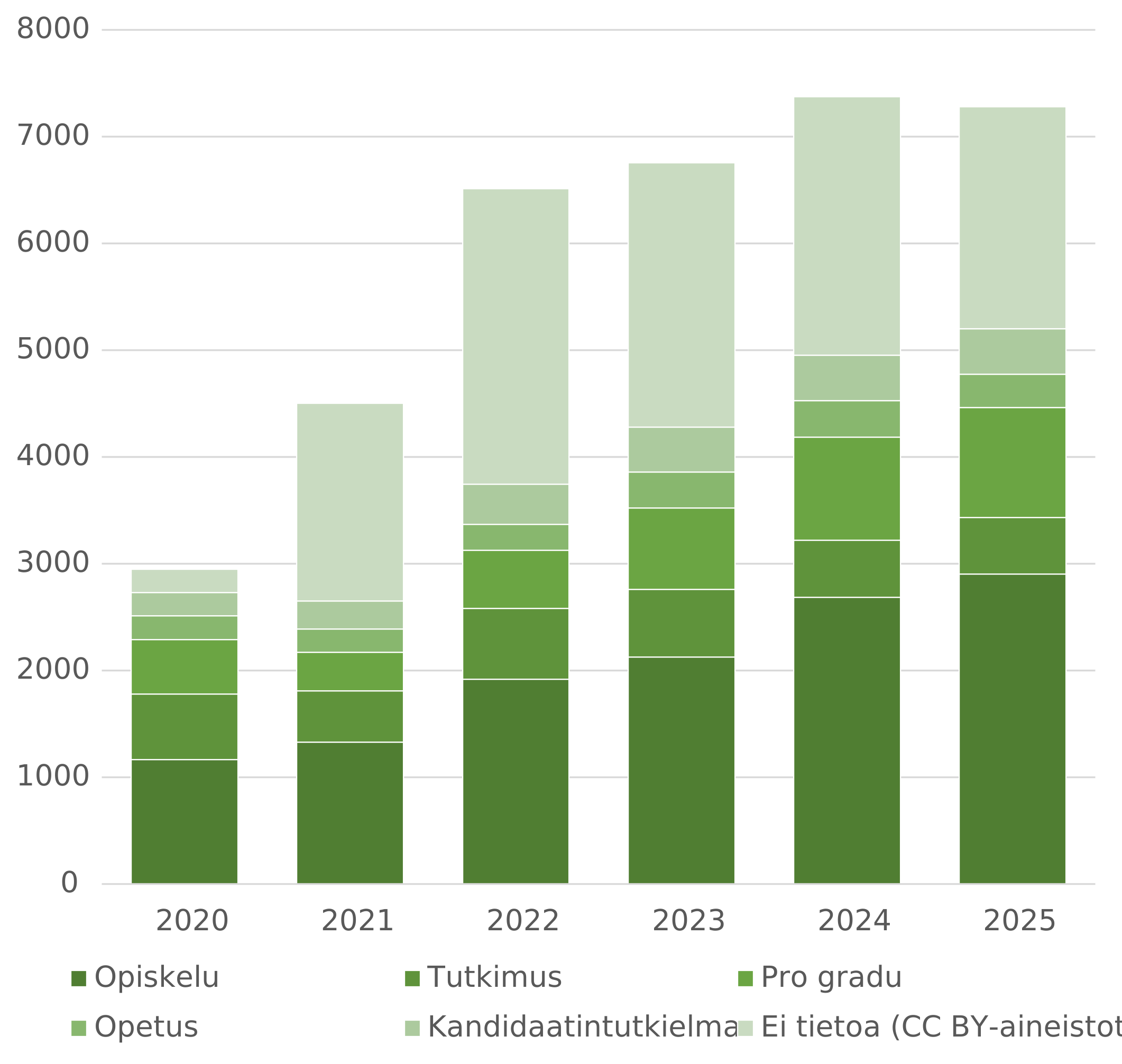
Aila has over 7,000 registered users from about 280 universities and research institutions from Finland and abroad. Most users are Finnish social scientists, but the user base is global and also includes researchers from medicine and health sciences to natural sciences and engineering.
More than half a million page requests are made to Aila every year. About a fifth of data downloads take place through Aila's English user interface.
Since December 2020, we have offered open CC BY 4.0 licensed data. This has both increased the number of data downloads from Aila and broadened our user base to include for example citizens, journalists, public sector actors and businesses. In March 2026, we adopted a CC0 licence for the public metadata of datasets. This change enables the metadata to be used more freely and in more versatile ways, for example in machine-readable formats and AI applications.
Greater visibility and satisfied customers
FSD provides wide national and international visibility to data and researchers since core metadata is made available in generic and topical data catalogues, such as Etsin (Opens in a new tab) , Finna (Opens in a new tab) , and CESSDA Data Catalogue (Opens in a new tab) . FSD’s Kuha2 (Opens in a new tab) is a metadata server that provides descriptive social science research metadata for harvesting via multiple protocols and a growing variety of metadata standards. The FSD SKG-IF API is a public OpenAPI for sharing our rich descriptive information (metadata) about the research datasets archived at FSD.

In addition to data, we offer several services for good data management across the data lifecycle. Our websites get up to two million visits annually. In our 2023 customer feedback survey, our customers expressed high satisfaction with our services and data.
All our key performance indicators are published in our annual reports (in Finnish).
Impact Stories
Archived data are fit for both quantitative and qualitative theses
Using an existing dataset leaves more time for analysing the data.
Linking publications, data and authors
Research data deposited at FSD have been used in almost 7,500 publications. Linking data and research articles through correct data citations is essential for properly attributing authorship and for building knowledge graphs that help navigating the growing scientific information jungle. FSD assigns persistent identifiers (PIDs) to metadata and data and links data to publications and authors using PIDs. Publications based on archived data can be searched in Aila.
FSD's experts are not part of university’s research staff, but we participate actively in developing metadata and data practices and standards. FSD staff’s outputs can be found in Tampere University Research Portal (Opens in a new tab) and on out Publications or Projects pages.
Open data makes it possible to identify errors
Thanks to the transparency provided by data sharing, the Finnish Institute for Health and Welfare was able to correct its analysis results (in Finnish).

Training and knowledge transfer
FSD offers guidance and methods training resources to researchers, teachers and students. Our most used training resources are the Data Management Guidelines and the Research Methods Guidebook. FSD's hands-on data anonymisation workshop concept equips social sciences and humanities (SSH) researchers with practical anonymisation skills, promotes responsible data management, and lowers barriers to opening and sharing research data.
FSD is part of local, national, European, and global research, development and innovation ecosystem and participates in building the FAIR ecosystem and creating and sharing best practices at all levels. Most of this work is done by actively participating in projects. Locally, FSD contributes to Tampere University's data services and open science practices. At the national level, FSD participates in the work of the Open Science Expert Panels and Working Groups (for example, in maintaining the Open Science and Research Reference Architecture (Opens in a new tab) and Guidelines for describing research_data (Opens in a new tab) , and has led work on guidelines for ethical review in human sciences PDF (Opens in a new tab) .
In the European scene, as a CESSDA Service Provider, FSD is part of the Social Sciences & Humanities Open Cluster (SSHOC). Globally, we contribute to standardisation bodies and collaborations like the DDI Alliance (Opens in a new tab) . CoreTrustSeal Board (Opens in a new tab) and Research Data Alliance (RDA) (Opens in a new tab) . FSD's experts have contributed to e.g. CESSDA Data Citation Guide (Opens in a new tab) and the CESSDA metadata model (Opens in a new tab) .
FSD develops software for its own needs, for use in the CESSDA archives, and in general for processing or presenting research data and metadata. Open-source software or components released by FSD are available on TUNI Gitlab or other services.
A game researcher delves into health consequences of gaming
Opening data saves resources and FSD’s experts provide an additional layer of trust.
Data collection resulted in an exceptionally high number of responses
FSD's textual collection tool Penna has been used to collect dozens of datasets.
Feedback collected from FSD’s anonymisation workshops shows that the training strengthens researchers’ capacity for responsible data anonymisation. Concise sessions, practical examples and hands on exercises support learning, lower the threshold for anonymising research data and highlight the importance of allocating adequate time for this work. Development suggestions emphasise the need for longer sessions, more complex case examples and advanced level training.
Green transition and sustainable development
We promote the Sustainable Development Goals by safeguarding a culture of open science (Opens in a new tab) . Data sharing and reuse saves resources by reducing the need to collect new research data. This entails savings in costs, time, and natural resources. FSD’s data collection contains a number of data series and individual datasets suitable for research on environment and energy. We also support quality teaching and education PDF (Opens in a new tab) through providing data and resources for students and teachers.
FSD adheres to the Tampere University’s sustainable development goals (Opens in a new tab) . We reduce carbon emissions by e.g. encouraging hybrid work, efficient use of facilities, and virtual participation in events and collaborations with partners abroad and in Finland. FSD’s preservation processes use capacity and storage resources optimally and for bit-level storage, we utilise the national Digital Preservation Service that has a low carbon footprint (Opens in a new tab) .
A pioneer in qualitative data archiving
The National Human Genome Research Institute has recommended FSD as one of three exemplary repositories curating qualitative data.
An open door to European research infrastructures
As the national CESSDA Service Provider, FSD can benefit from synergies provided by common practices and services.
Wide and versatile impact
FSD strengthens the national and European research and innovation ecosystem by ensuring that high-quality Finnish social science data remain accessible, interoperable, and reusable over the long term. FSD’s services support timely research on major societal challenges, strengthen transparency and trust in science through FAIR and open data practices, and expand the use of research data beyond academia to public sector actors, businesses, and citizen scientists.
FSD generates both immediate and long-term returns by strengthening research capacity, improving the usability of data resources, and increasing the societal impact of publicly funded research.